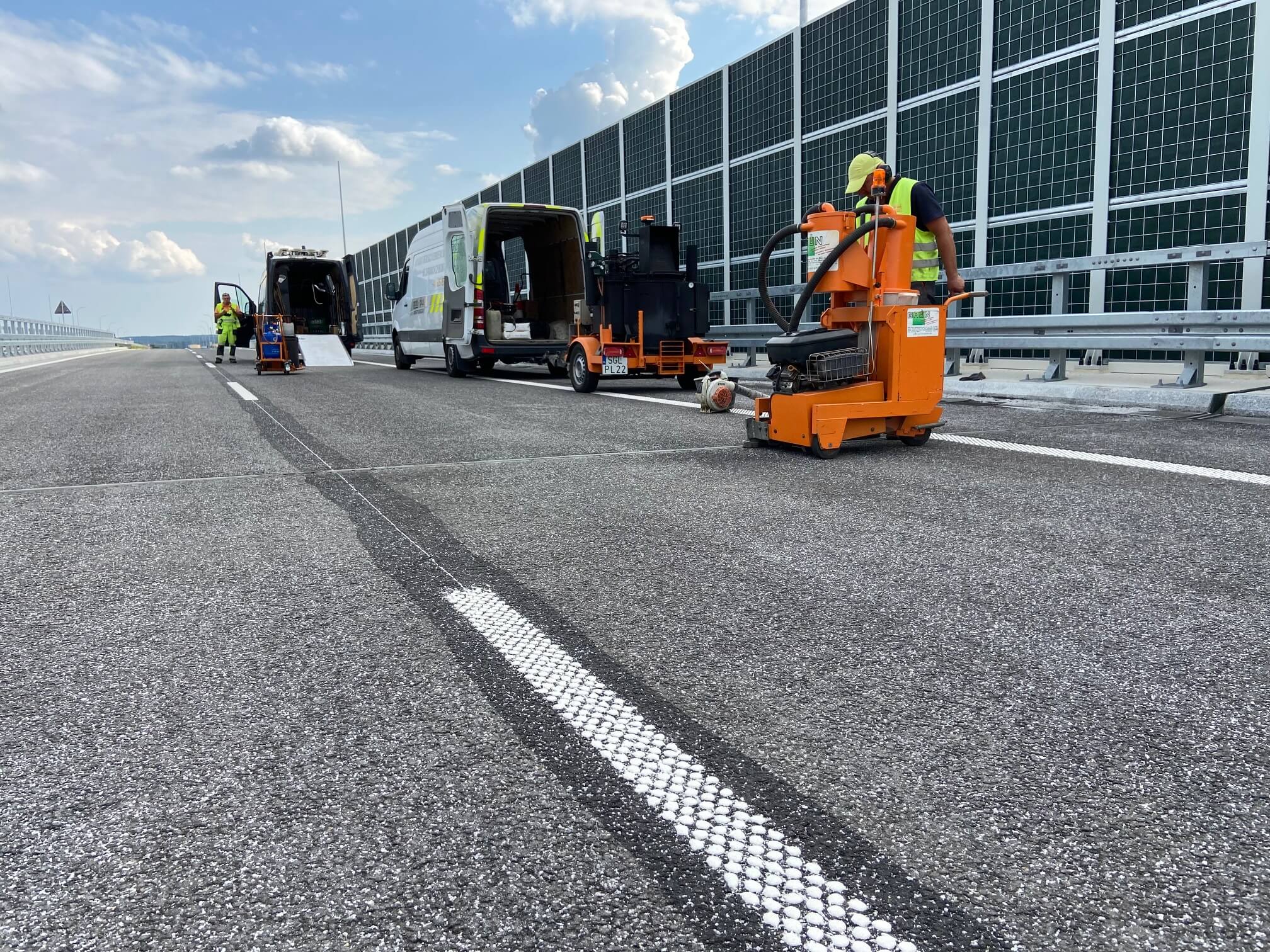
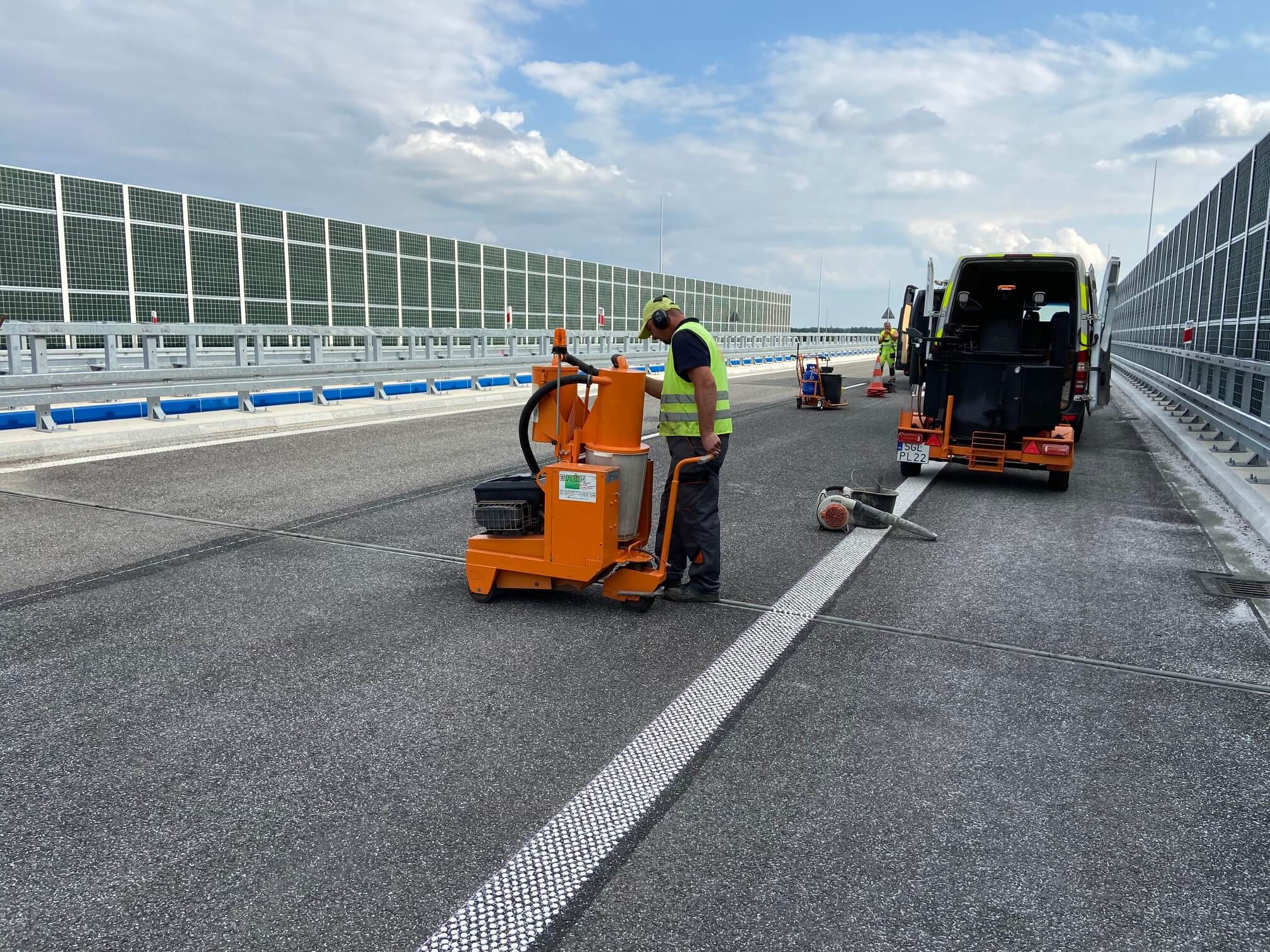
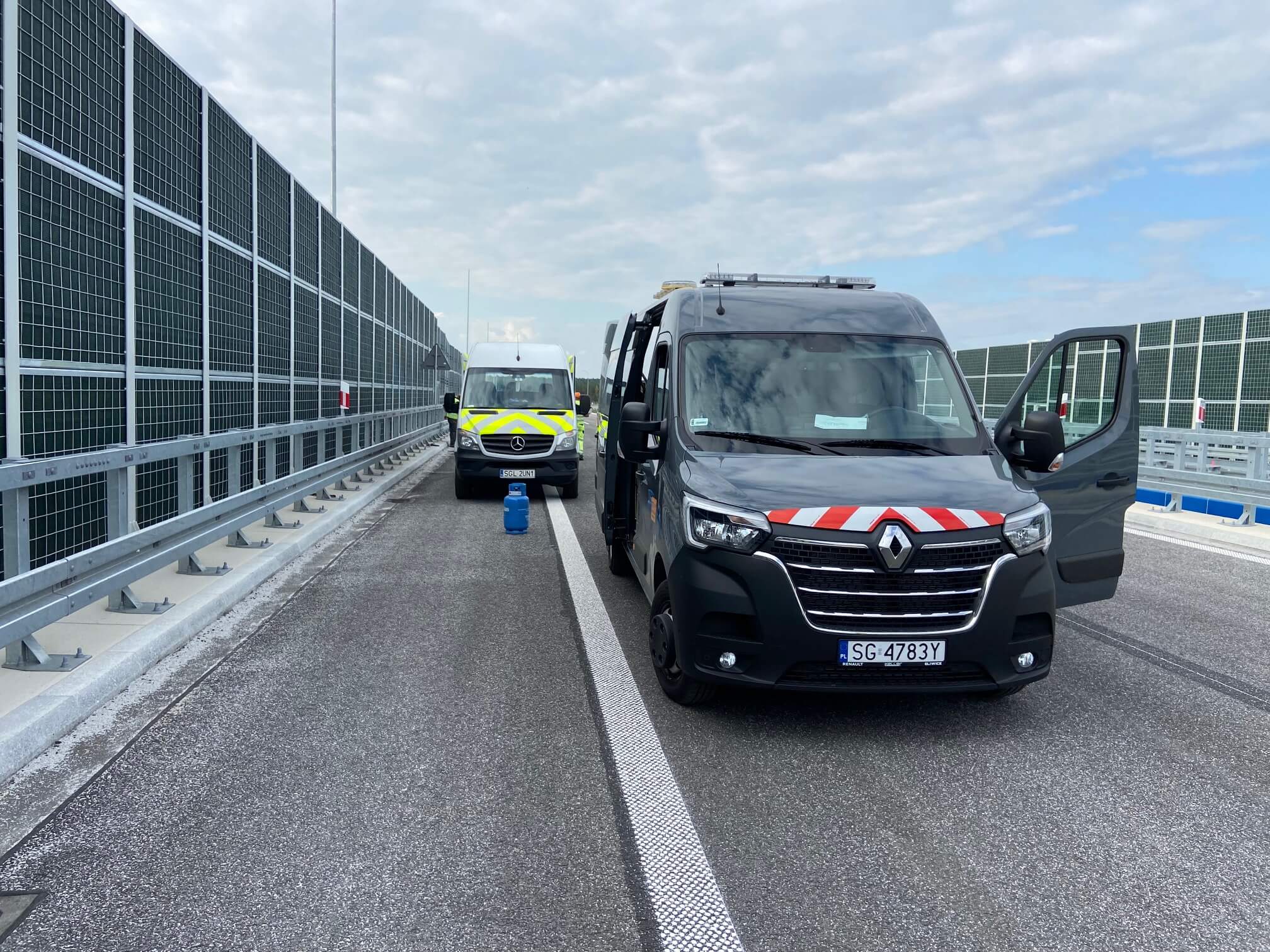
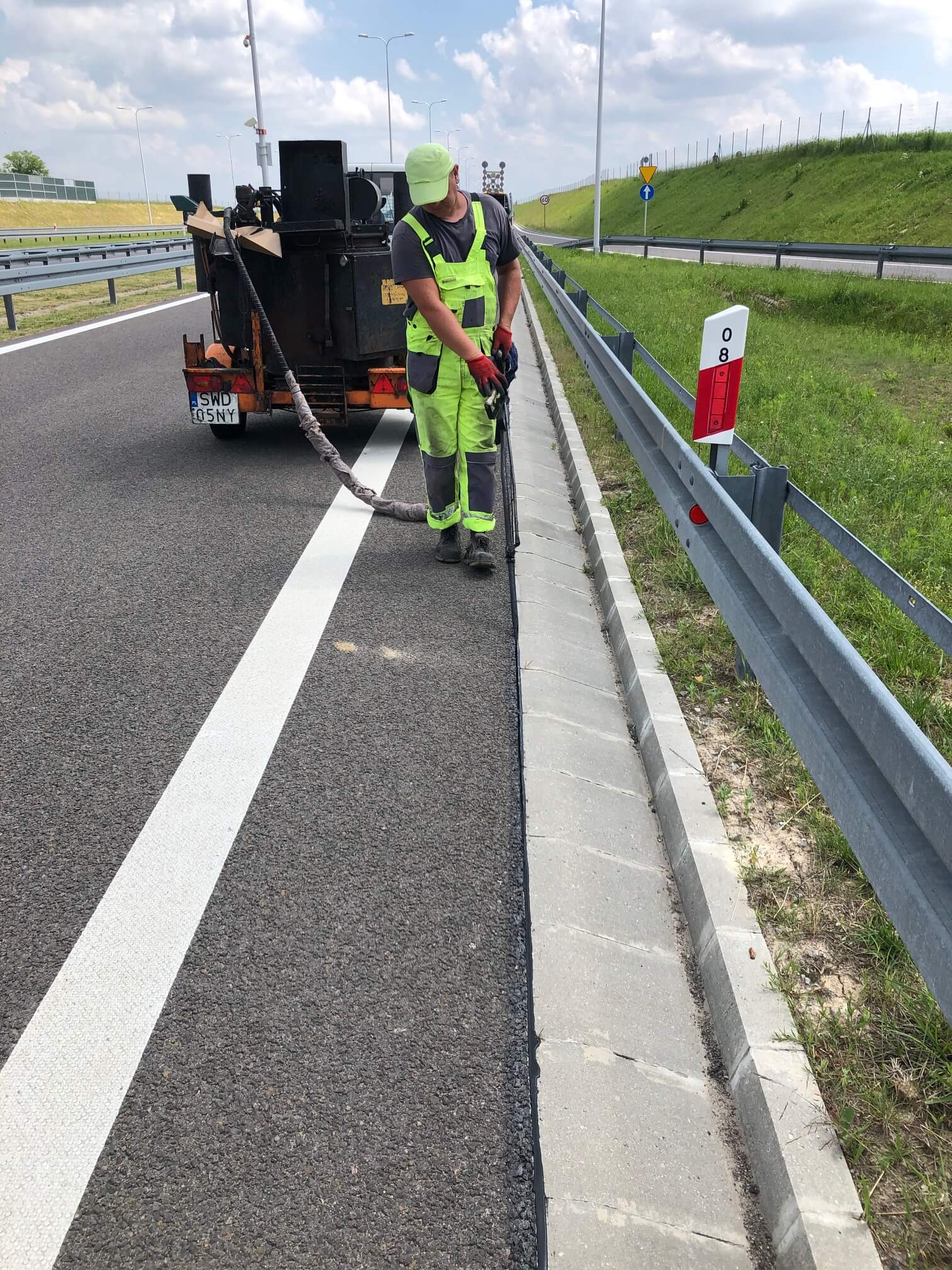
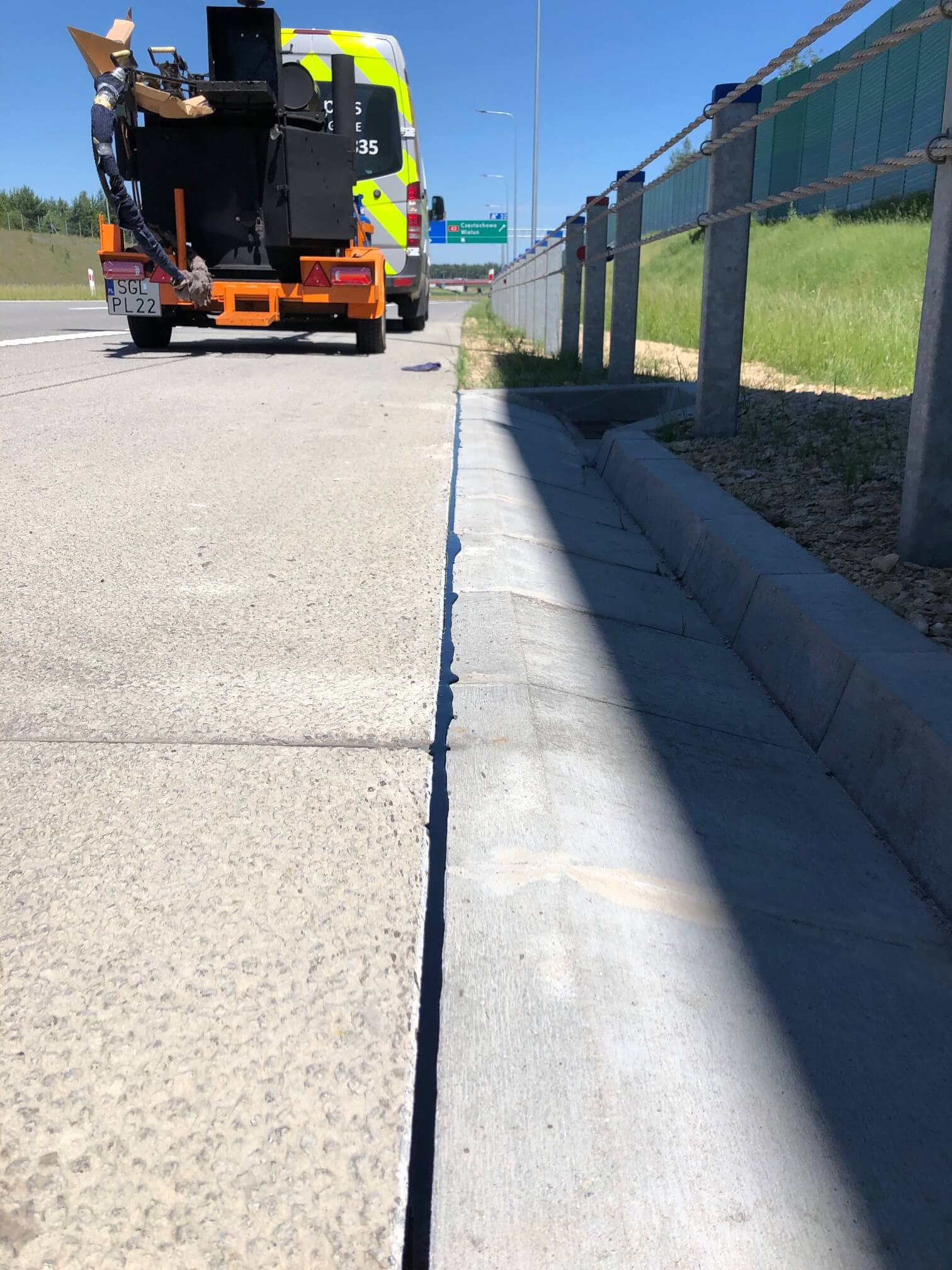
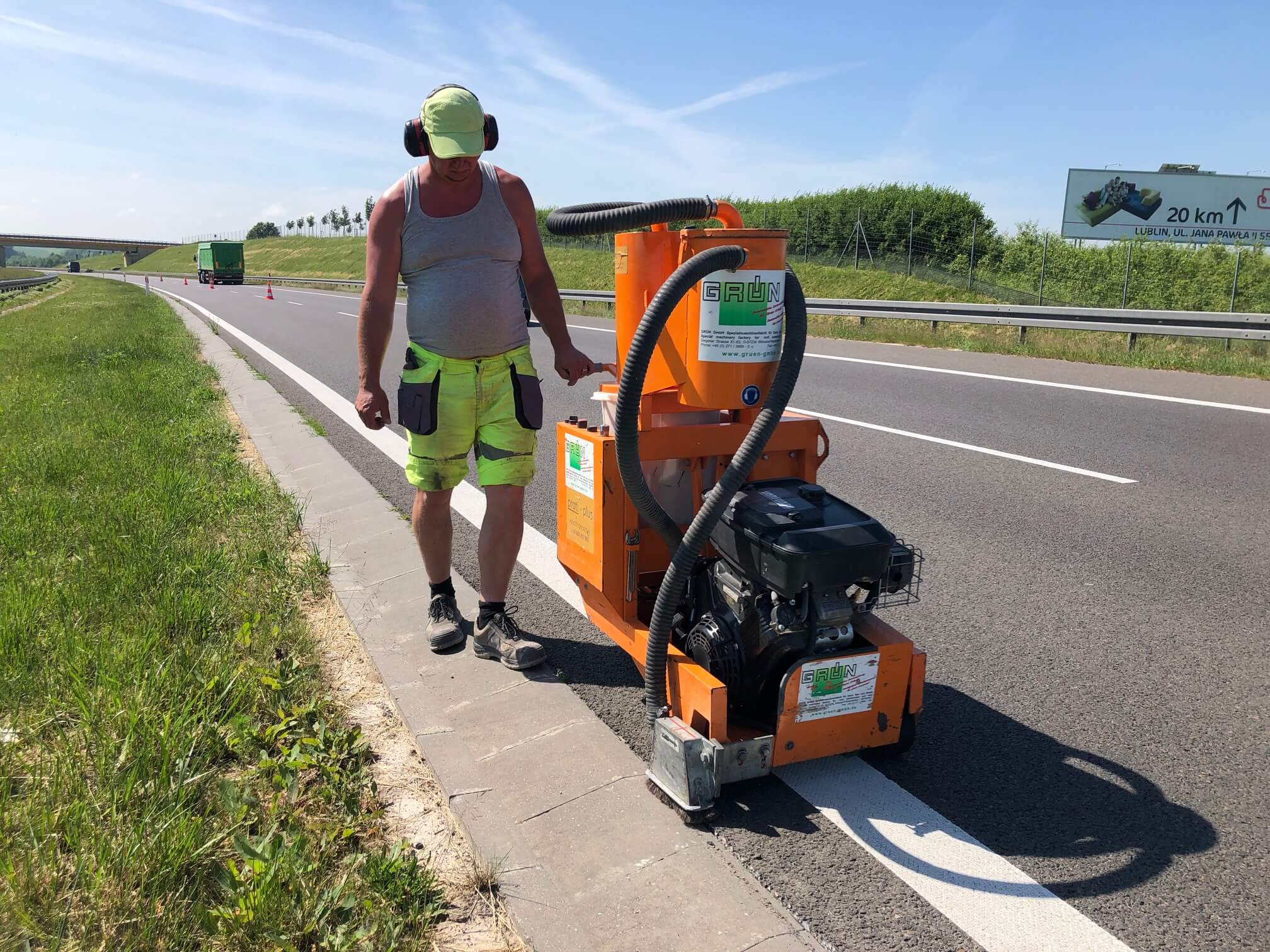
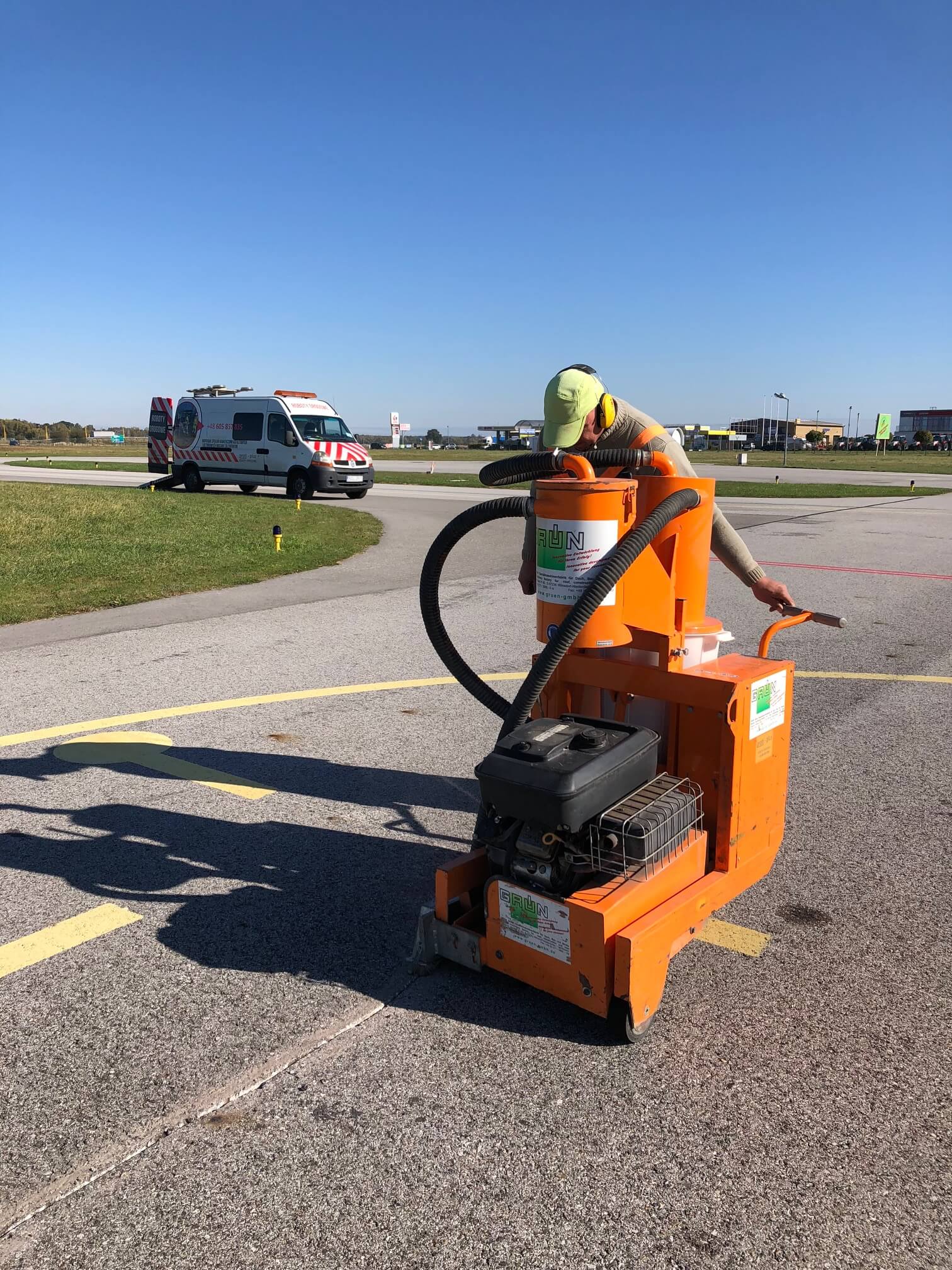
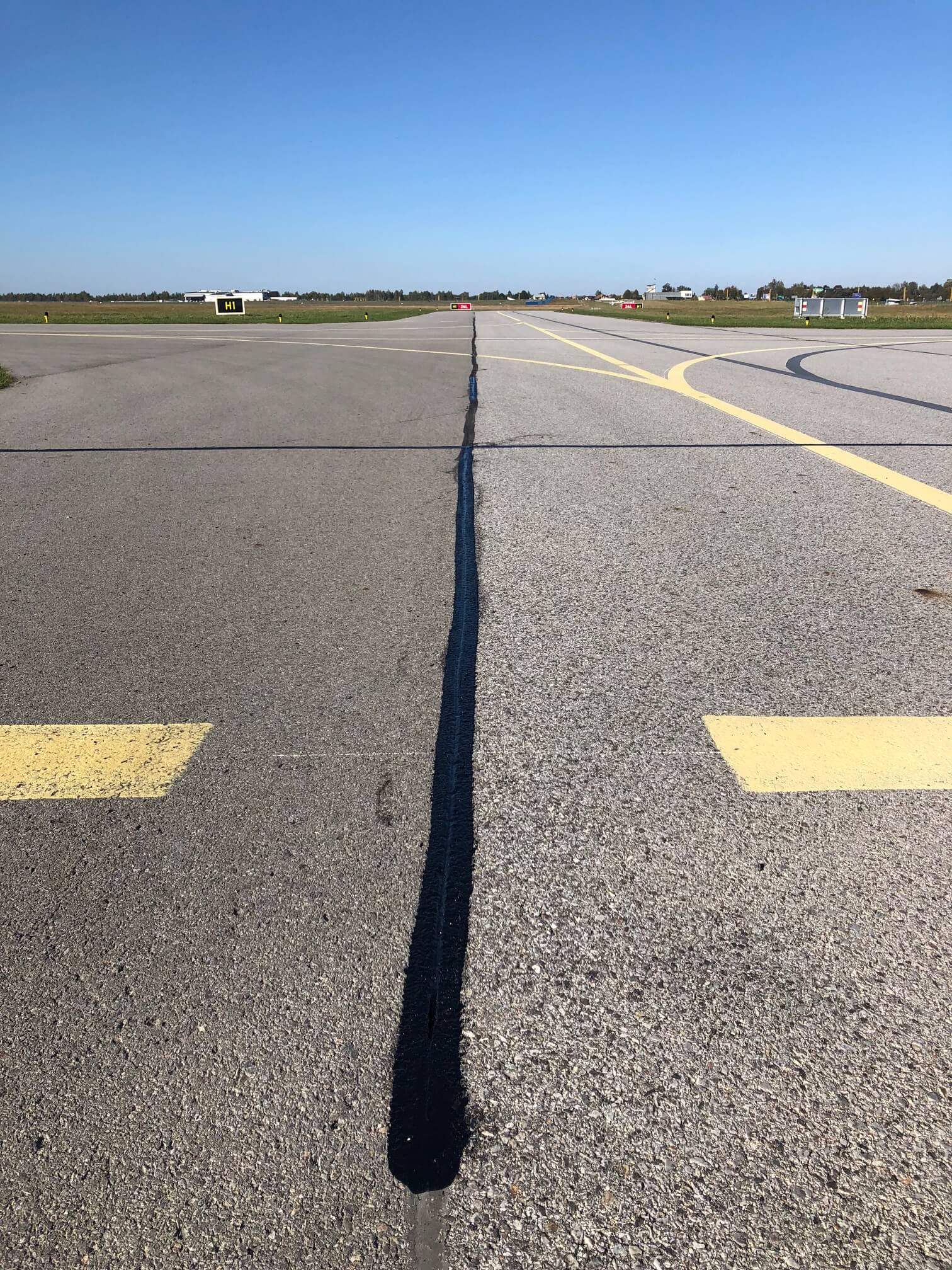
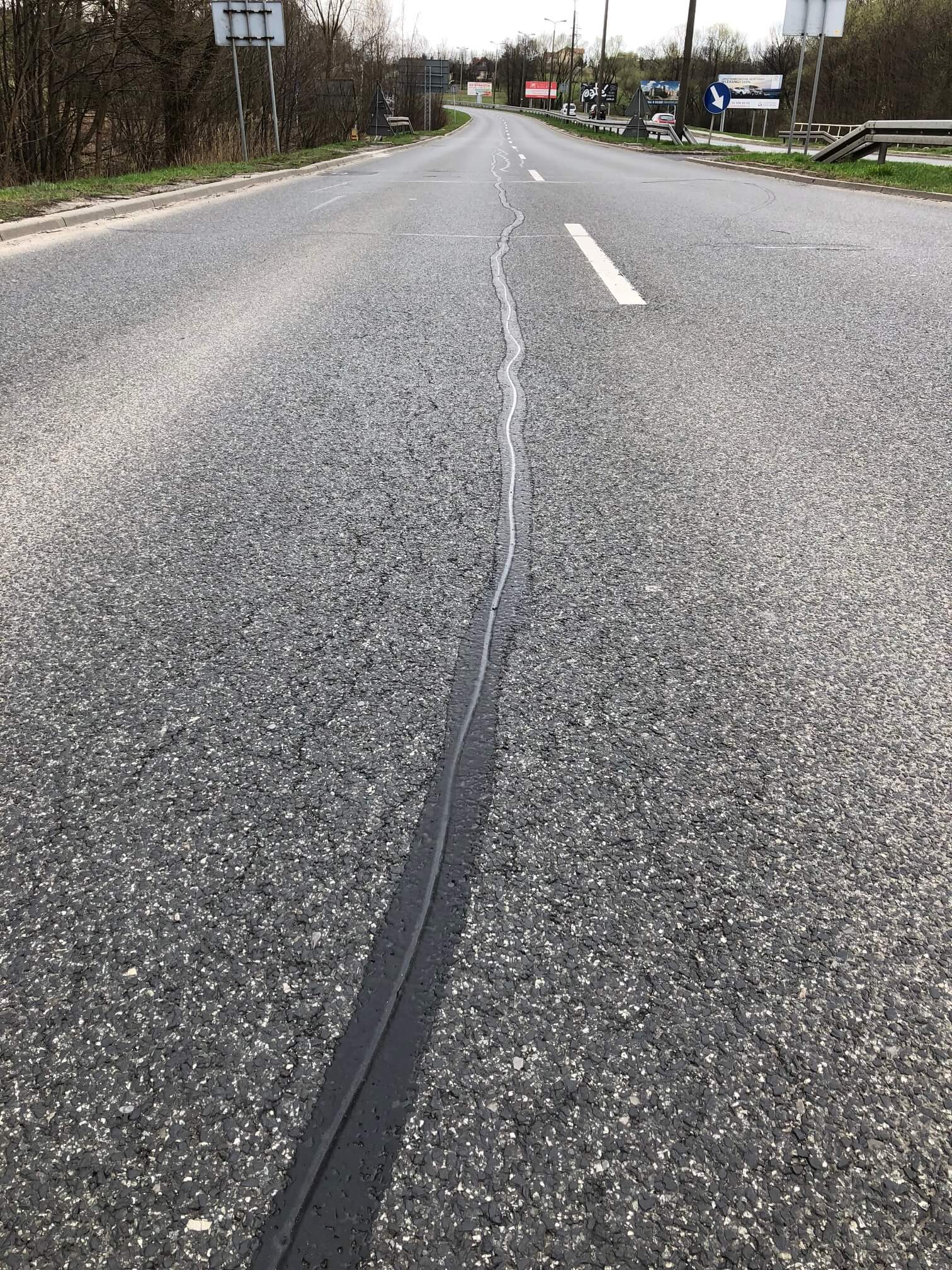
One of the main damage to bituminous pavements are its cracks, which may take the form of longitudinal, transverse and mesh cracks. Cracks most often occur in the wearing course (as a result of a crack, it loses its continuity and creates a crack in the form of a fissure), but may also apply to the lower layers. Repair of cracks and unsealed technological joints is performed with the use of hot bituminous sealing compounds in accordance with the PN EN 14188-1 standard, modified with SBS copolymer or with synthetic resins, or other additives. These masses are characterized by good gap filling ability, low drainage at a temperature of + 60oC, very good adhesion to cement concrete and asphalt concrete surfaces. The asphalt surface repair process begins by milling the crack with a disc cutter, which guarantees the correct shape of the slit walls. The joint is then cleaned with compressed air and primed with a resin-based primer. At the very end, the joint is filled with bitumen sealing compound at a temperature of approx. 160-180oC.